
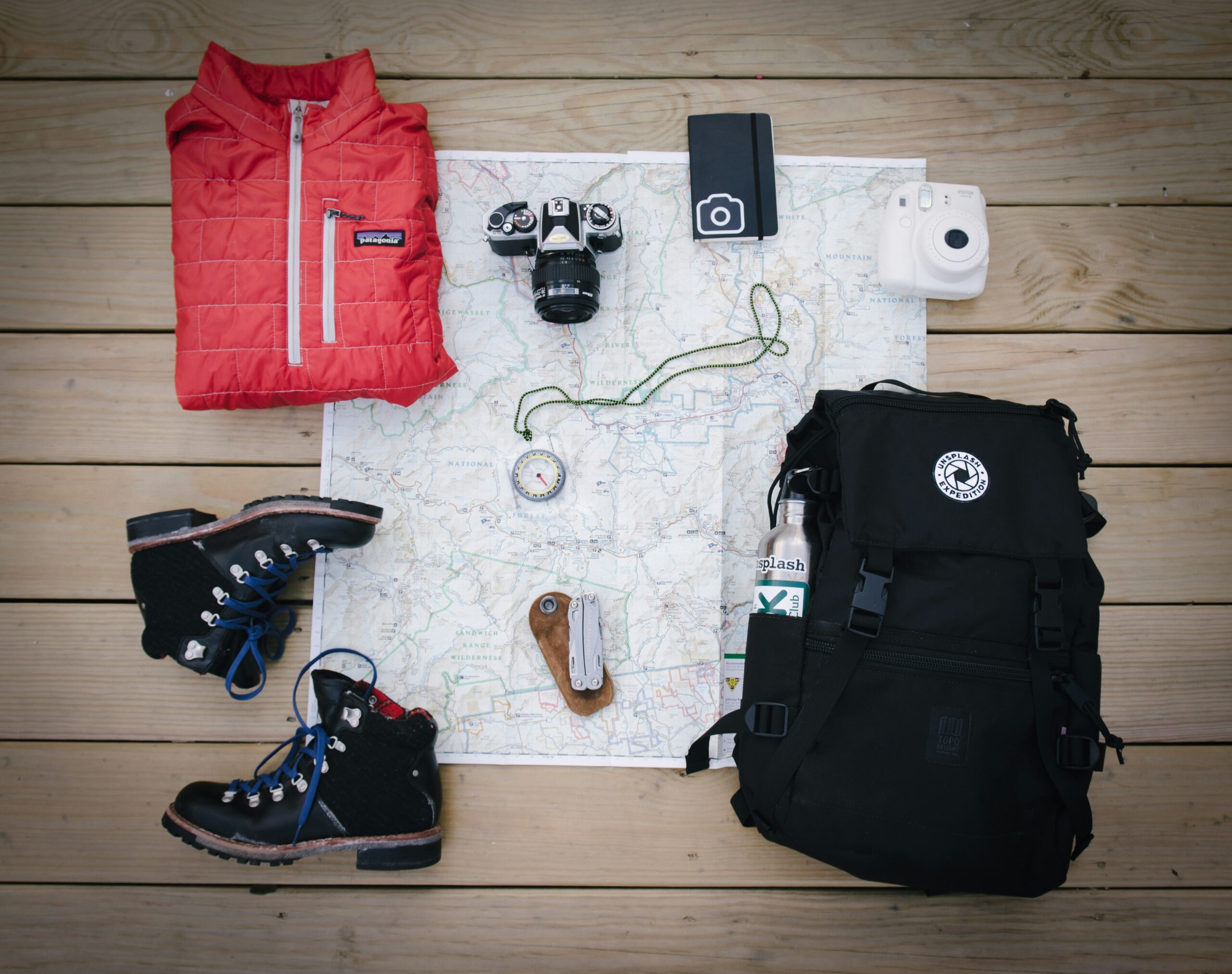
The 10 essentials are the gear and supplies important to take with you on your adventures.
It won’t land you in jail if you forgot them, but these are useful and practical in purpose, and if you find yourself in an emergency
situation, carrying these with you can be the difference between living and dying.
Table of Content:
- Map and compass / GPS / phone
- Fire starter
- Food and water
- Pocket knife
- Whistle / pocket mirror
- Blanket warmer/ shelter
- Flash light
- Power bank
- Extra layers
- First aid kit
- Plus one additional protectant
1. Navigating Gear

Before phones and GPS, explorers used maps and a compass to navigate the world. Now with modern technology, it’s much easier to download an app and use it for directions. There are a lot of niche apps like Gaia and AllTrails. Costlier gadgets are even more reliable, for example, a handheld GPS like Garmin inReach with a dedicated SOS button to help you get help in emergency situations. Also, there are hybrid handheld GPS that use your phone as a screen, like Garmin inReach mini and Spot.
2. Fire Starting Kit

The weather could be unbearable at times, and depending on where you’re going, having the tools to start a fire can help increase your chance of survival. This could be a lighter, or a flint and striker. Also, bringing steel wool or having wood shavings can really help you get a fire going.
3. Food and Water

Bring extra food and water during your trips. Food can be snacks, dehydrated meals, or energy gels. If you are a foodie, bring extra snacks. Bring extra water or a water filter. Dehydration is your enemy when you don’t drink enough water. So, make sure to stay hydrated.
4. Pocket Knife

These can be extremely useful to open meal packages, make wood shavings, cut rope, and prep your meals like fish, meat, and veggies. Keep in mind that in Canada pocket knives that can automatically open are illegal. Be cautious when carrying knives because they can cause serious injuries when improperly used and stored.
5. Signalling Gear

A whistle is one of the most practical gear to signal for help. Higher-pitched sounds travel further, so when looking for a whistle, try to get one that has a higher pitch and works even if it’s wet. If you need to signal someone in the air, a mirror can help you get their attention.
6. Shelter and Warming Up Gear

An emergency blanket reflects your heat back, and it’s large enough to provide some shelter too. You’ll be surprised how fast you warm up using one. This goes without saying, but if you are staying overnight in the wilderness, bring a tent with you.
7. Light Device

Lights are extremely useful. Do not forget them. I prefer to bring multiple headlamps and small flashlights with me. If I could, I would try to buy devices that have a built-in flashlight in case my lights ran out of battery.
8. Power Bank

These extend battery life by charging your devices. I recommend bringing multiple power banks or investing in higher mAh. 10,000 mAh is the typical power bank from stores. 30,000 mAh can last multiple charges. Keep in mind to check the allowable limit for power banks before flying because there are restrictions.
9. Extra Layers

The best way to keep your temperature regulated is to wear layers. Extra shirts, jackets, socks, and pants will keep you comfortable, especially in cold areas. Feel confident when adding or removing layers during hikes because you are keeping yourself safe. Personally, I get cold easily once I stop moving, so I like to keep my layers easily accessible in my pack.
10. First Aid Kit

One of the most underrated essentials. Nobody plans to get sick or injured on their adventure, but when it happens, it’s better to have something with you until you get proper treatment. Personalize your first aid kit so it is useful to you and your company. I like to bring medicine like loperamide, Benadryl, and Advil/Tylenol, wound supplies – dressing, bandana, pins, and tapes, and finally ice packs.
Plus one – Sun Protection

The sun causes most skin cancers in the world, and skin cancers can be prevented. This means protecting our skin is extremely important. The Skin Cancer Foundation recommends at least 15 SPF or higher every day, and at least 30 SPF if staying outdoors for an extended period of time. Don’t forget to reapply at least every 2 hours.
Check out how to prevent cancer: https://www.skincancer.org/skin-cancer-prevention/